
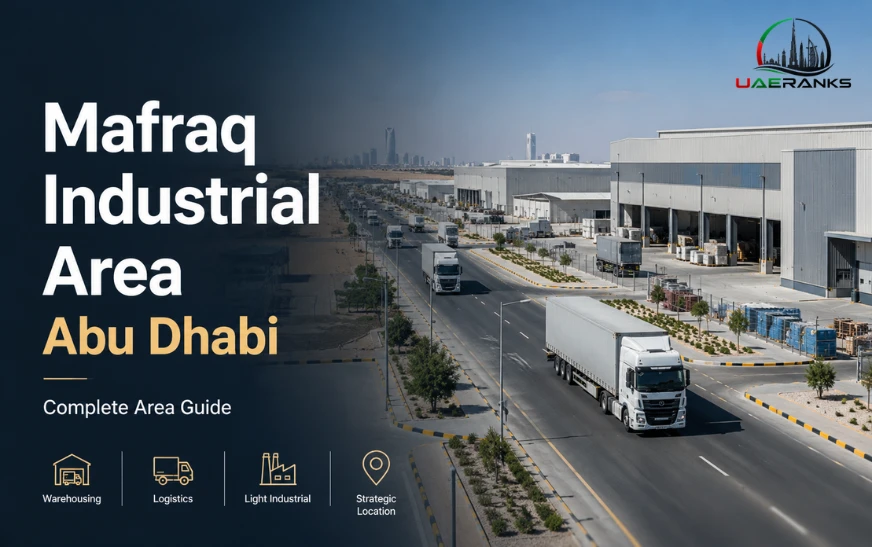
Mafraq Industrial Area Abu Dhabi is a commercial and industrial area for businesses requiring warehouse, operational space, office, yards or workforce accommodation away from the capital’s high-density urban centre.
Its position near Al Wathba, Baniyas, Mohammed Bin Zayed City, and other commercial districts makes it relevant to logistics companies, construction suppliers, storage operators, contractors, and businesses serving customers across Abu Dhabi.
But location should not be the only factor in a leasing or investment decision. Permitted activities, utility capacity, staff transport, delivery access, safety approvals and the overall cost of running a business from the property are also factors that businesses need to take into account.
What Is Mafraq Industrial Area?
Al Mafraq Industrial Area, also known as Al Mafraq Industrial Area, is a commercial area in Al Mafraq and Al Wathba locality.
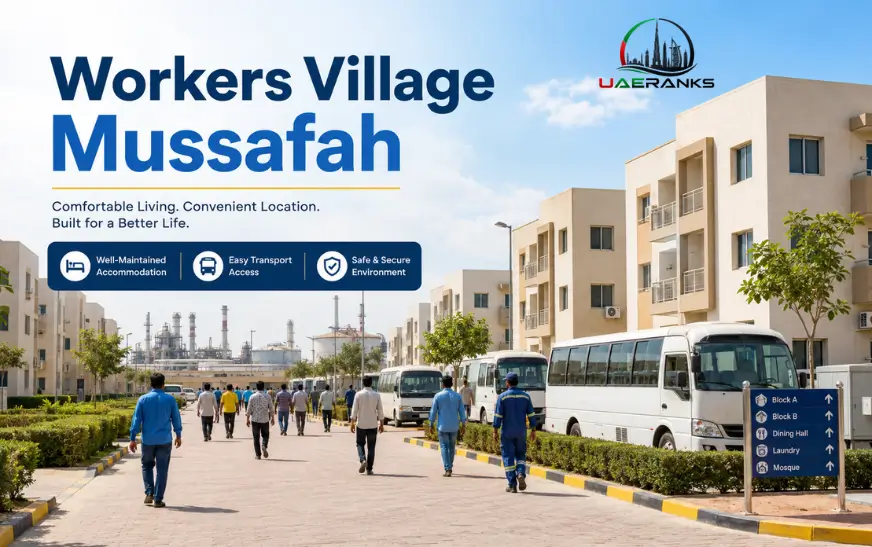
Commercial units, offices, labour accommodation, warehouses and supporting services are located in the area. The wider district is also linked to workforce housing facilities, such as Al Mafraq Workers City.
It should not be confused with a typical family-oriented residential neighbourhood. While workers can stay in approved worker housing, those seeking traditional apartments, villas, schools, and community facilities will typically look at nearby areas like Baniyas or Mohammed Bin Zayed City.
The industrial area is best seen as a working area. It has buildings, roads, services and property types that are primarily geared towards commercial operations and not towards residential lifestyle needs.
What Is the Location of Mafraq Industrial Area?
The district is located in the interior of Abu Dhabi, on the Jarn Yafour and Al Wathba side of the emirate. It is located between or close to Baniyas West, Al Wathba, Mohammed Bin Zayed City, ICAD and Bawabat Al Sharq.
It is bounded by and connected to:
- Al Rawdah Road
- The E30 is the Abu Dhabi–Al Ain Truck Road.
- Sheikh Khalifa Bin Zayed International Road, E11
- Roads to Baniyas, Al Wathba, ICAD and the rest of the Abu Dhabi area
These connections are crucial for businesses that receive materials, send goods, move equipment, or transport employees. It is a road-centric area rather than pedestrian, meaning that most businesses will require private vehicles, staff buses, delivery vans or fleet transport.
Actual travel times will vary depending on the location, traffic, road works, vehicle type and any restrictions that may apply to commercial vehicles. Businesses should test their routes during actual working hours rather than just using an online distance estimate.
The Importance of Mafraq Industrial Area
Industrial districts enable activities that are not easily carried out in central commercial neighbourhoods. Requirements can include loading space, storage space, outdoor yards, worker accommodation, equipment access, or separation from busy residential streets.
Mafraq is also part of the wider trade and logistics landscape in Abu Dhabi. The Department of Economic Development in Abu Dhabi lists transport connectivity, warehousing infrastructure, ports, airports and business licensing as key elements of the emirate’s logistics industry.
For a particular company, Mafraq’s value can be derived from the following practical considerations:
- The availability of an industrial property of the appropriate size.
- Space for loading and vehicle traffic.
- The availability of workforce accommodation.
- The links with other inland industrial areas
- Serving projects in multiple areas of Abu Dhabi.
These benefits are not guaranteed. A property is only valuable if its specifications are in line with the company’s daily operations.
The Types of Property in Mafraq Industrial Area Are as Follows:
Warehouses
The area is primarily known for its warehouses. Depending on the unit’s approvals, they can be used for general storage, building materials, equipment, packaged products, spare parts or distribution.
Two warehouses of the same size can be very different. Ceiling height, column spacing, loading door size, ventilation, insulation, floor strength, fire systems and vehicle access are all important differences.
A business should therefore check the physical unit before making a selection based on floor area and photographs.
Open Yards and Industrial Plots
Open yards may be beneficial for businesses that use machinery, construction materials, vehicles, containers, or outdoor equipment.
When leasing a yard, check out what can be legally stored. Different permissions may be required for outdoor storage, vehicle parking, fabrication, waste handling, and equipment maintenance.
Other areas to be checked include drainage, surface condition, fencing, lighting, dust control, and security.
Shops and Offices
Customer service, administration, trading, procurement and industrial supply activities are supported by commercial shops and offices. There are smaller commercial units and larger operational properties in Mafraq.
An office attached to a warehouse may be convenient, but businesses should ensure that the office space is part of the approved plans and that there is adequate parking for visitors.
Worker Accommodation
Mafraq Workers City and other labour accommodation facilities are for workers in construction, industrial and related sectors.
Employers looking at providing housing for workers should check capacity, room requirements, transportation, maintenance, and current accommodation requirements. Safety, occupancy rules and employee welfare should never be sacrificed for a low room rate.
What Types of Businesses Might Be Appropriate for Mafraq?
The area may be appropriate for operations that require warehouse space, road access, yards, and proximity to industrial customers.
Examples include:
- Storage and regional distribution
- Construction-material suppliers
- Equipment rental businesses
- Maintenance and technical service providers
- Freight and delivery operators
- Spare-parts distributors
- Commercial vehicle support services
- Equipment or material yards required by contractors
- Activities that are approved for manufacturing or assembly.
This is not to say that all properties are legally able to host all businesses.
A warehouse that is approved for dry storage may not be appropriate for food processing, vehicle repair, chemical storage, metal fabrication, or manufacturing. Additional reviews and approvals are typically required for uses involving noise, emissions, hazardous materials, high electrical loads, or substantial fire risk.
Before paying a deposit, request a written agreement of the activity allowed.
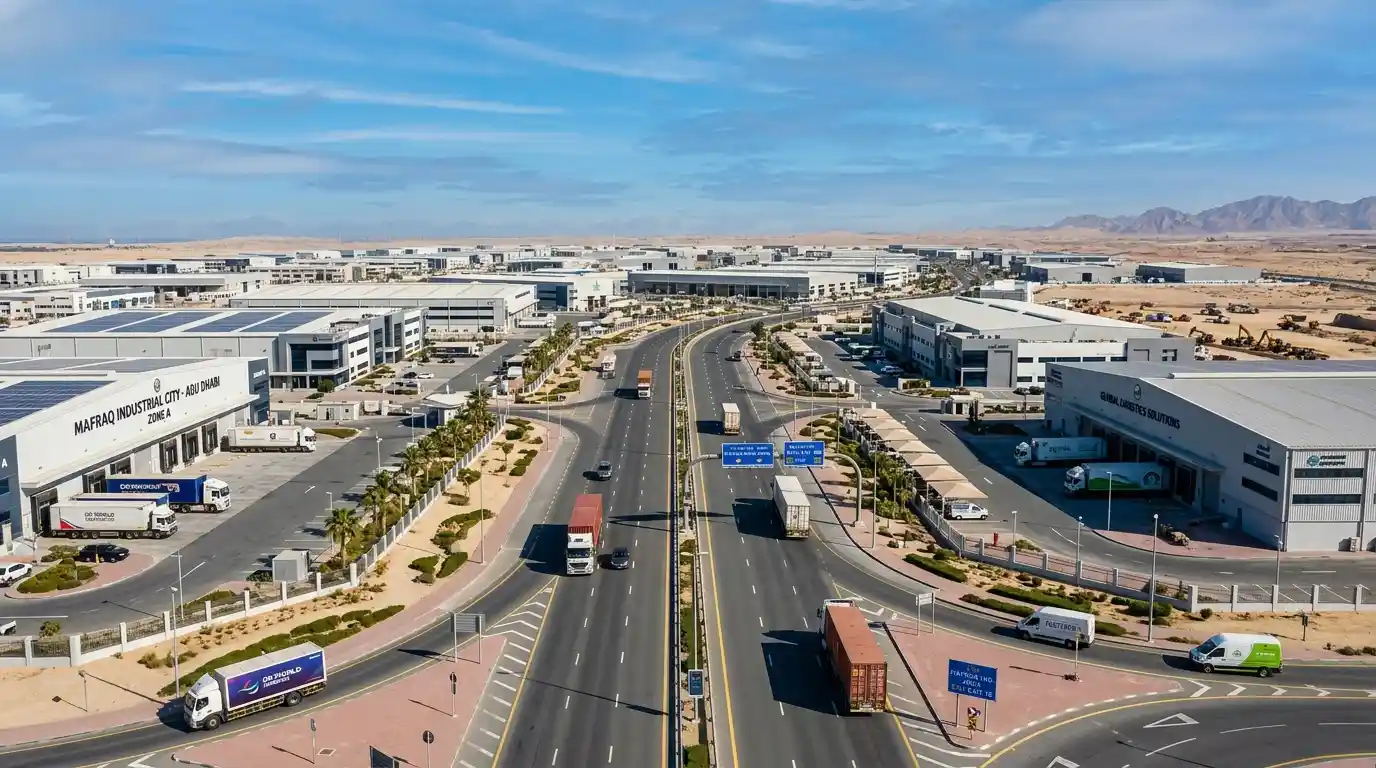
Transport and Accessibility
One of the key operational benefits of Mafraq Industrial Area is its access to major roads. However, companies should analyze the end of each delivery route.
A wide highway connection is not very useful if the loading access to the warehouse is too narrow for trailers or if parked vehicles block the loading access.
When visiting a site, inspect:
- Rotating space for anticipated vehicle dimensions
- Access to trailers and containers.
- Loading and unloading areas
- The height and width of the gate.
- Road condition close to the unit
- Staff and visitor parking
- Peak-hour congestion
- Legal truck routes and time restrictions
There is public transport in the wider district. Al Mafraq Workers City is currently included in Abu Dhabi Mobility’s Abu Dhabi Express services, operating throughout the day and evening. Routes and timetables may be subject to change, please check the most up-to-date journey with the official transport service.
Private staff transport may still be required for businesses with shift workers, particularly if the shift starts early, ends late or is located away from a public transport stop.
The Area Is Surrounded by Amenities and Services
Mafraq Industrial Area offers practical services for employees and businesses such as groceries, cafeterias, restaurants, mosques, pharmacies and basic retail outlets.
Other communities like Baniyas and Mohammed Bin Zayed City offer more extensive shopping, education, medical and residential services. Area guides are not a large cluster of medical facilities within the industrial zone, but rather hospitals and clinics in surrounding districts.
Al Wathba Wetland Reserve is also a well-known feature of the wider Al Wathba locality. It is a protected area according to the Environment Agency – Abu Dhabi and an important habitat for flamingos and other bird species according to the official tourism platform of Abu Dhabi.
Companies located in close proximity to environmentally sensitive land should check if their operations are subject to extra controls on discharge, waste, lighting, noise, emissions or site development.
Benefits of Operating in Mafraq
Operational Space for Businesses.
Companies have a choice of property formats, as warehouses, yards, offices, industrial plots and worker accommodation are all available.
Road Connectivity
Routes can be planned to connect with E30, E11 and other districts to facilitate deliveries and regional operations.
Close to Other Business Districts
The district is close to ICAD, Baniyas, Al Wathba, Mohammed Bin Zayed City and Bawabat Al Sharq, which can facilitate companies to access suppliers, employees, contractors and customers.
Workforce Support
Companies can use worker accommodation and transport services in the wider area to help them manage labour-intensive operations.
There Are Some Potential Limitations to Keep in Mind:
Not all organisations will be suitable for Mafraq.
A business that serves customers might want to be in a more central position where there is more foot traffic. Residents of Abu Dhabi Island might have to travel longer distances to work, and companies that don’t have their own vehicles may struggle to get to the end of the line.
Other considerations include:
- Restricted family housing in the industrial area
- Relying on cars, buses and commercial vehicles
- Different utility capacities from one property to another
- Restrictions on activities for specific units
- Possible truck-route limitations
- Less amenities than central communities
A lower advertised rent does not necessarily mean lower operating costs. The final budget can be influenced by transport, maintenance, fit-out, cooling, security, insurance, staff buses and licence approvals.
How to Choose a Warehouse or Commercial Unit
Verify the Approved Use
Ask for the unit’s allowed activity, approved drawings, ownership or leasing rights, and relevant licences. Match these documents to the exact activity on your economic licence.
Inspect Loading Access
Take the size of your biggest regular car. See if it can get in, turn, park, load and get out safely.
Inspect Electricity and Utilities.
Don’t take it for granted that the electrical load will be available for your machinery, cooling system, workshop tools, or charging equipment.
Check water supply, drainage, telecommunication, ventilation and waste systems as well.
Check Fire and Safety Systems Inspect Fire and Safety Systems.
Inspect fire exits, fire alarms, fire extinguishers (where applicable), sprinklers (where applicable), emergency lighting, access routes and Civil Defence documentation.
Changes to partitions, storage racks, production lines or mezzanine floors could impact safety approval.
Determine the Overall Cost of Occupancy
Besides the annual rent, take into account:
- Security deposit
- Agency fees
- Utility deposits
- Fit-out expenses
- Maintenance
- Insurance
- The cost of licences and approvals
- Waste collection
- Security services
- Staff transport
- The conditions for rent increases and rent renewals.
This calculation is more useful than just annual rent.
Visit More Than Once
Inspect the property during a normal working day. A second inspection at the time of peak delivery may show traffic, parking, noise or odour issues that were not observed on the initial inspection.

Business Licensing and Approvals
Companies in Abu Dhabi must have the right economic licence and any other permissions related to their business.
The Abu Dhabi Department of Economic Development provides a list of several licence categories. It has a Standard Licence that allows businesses to carry out approved economic activities in the emirate, and manufacturing activities may need an industrial licence and technical approvals.
The overall setup procedure may include:
- Choosing and registering the business activity
- Reserving a trade name
- Obtaining initial approval
- Finding an appropriate tenancy
- Getting approvals from relevant authorities
- Issuing the economic licence
- Fulfilling activity-specific inspections or permits
Requirements are dependent on legal structure, activity, property, equipment and environmental or safety risk. Current procedures should be obtained from TAMM and ADDED.
Common Errors to Steer Clear of
A frequent error is choosing the lowest priced unit without determining if it will accommodate the activity.
Businesses should also not do:
- Signing without reading the property documents.
- When making assumptions about a warehouse, it is important to consider that there is no limit on outdoor storage.
- Failure to consider truck access and loading space
- Not testing electricity capacity
- The installation of a mezzanine without permission
- Underestimating staff transport costs
- Using an outdated property listing
- Paying in advance of confirming the landlord’s authority
- Making worker accommodation optional
- Assuming licences can be transferred automatically between locations
A written statement is more reliable than a verbal statement from an agent, caretaker, or previous tenant.
Final Takeaway
Mafraq Industrial Area Abu Dhabi may be a viable site for warehousing, distribution, contracting, equipment-related activities, industrial services, and approved manufacturing.
It has excellent road access, commercial property layouts and close to workforce housing. Meanwhile, businesses need to take a close look at transport, utilities, permitted use, safety compliance, employee access and total occupancy costs.
The right property isn’t just the biggest or cheapest. It is the unit that provides the legal and practical foundation for the operation of the business.
FAQ’s
1. What Is the Location of Mafraq Industrial Area in Abu Dhabi?
Mafraq Industrial Area is situated in the interior, close to Al Wathba, Baniyas, Mohammed Bin Zayed City and ICAD. It is linked to main roads such as E30 and E11.
2. What is Mafraq Industrial Area used for?
It is utilized for warehouses, commercial units, offices, open yards, industrial activities and worker accommodation.
3. Are warehouses available in Mafraq Industrial Area?
Yes, warehouse properties are commonly found in the area. Availability, specifications, permitted use and rents are subject to change by property.
4. Is Mafraq Industrial Area a Residential Area?
It is mainly a commercial and industrial area. Conventional family housing is more prevalent in surrounding communities, but worker accommodation is available.
5. Which businesses are suitable for Mafraq?
The area can be used for logistics, storage, construction supply, equipment renting, contracting, distribution, maintenance and approved manufacturing companies.
6. Does Public Transport Service Exist in Mafraq Industrial Area?
Public transport is available for the wider area, including to Al Mafraq Workers City. Please refer to the latest Abu Dhabi Mobility routes and timetables for travellers.
7. Does ICAD Have a Close Location to Mafraq?
Mafraq Industrial Area and ICAD are neighbouring industrial districts in the wider inland Abu Dhabi region. Actual travel time will vary based on traffic and locations.
8. Is a Licence Required for Running a Warehouse in Mafraq?
Yes. The business must have the right economic licence in Abu Dhabi and the warehouse must be approved for the business activity.
9. What Should I Look for Before Signing a Lease for a Warehouse?
Review allowed use, loading access, electrical capacity, fire systems, ventilation, drainage, parking, property documents, and overall occupancy costs.
10. What Are the Investment Opportunities in Mafraq Industrial Area?
It could be appropriate for investors looking for industrial or commercial property, but suitability will depend on tenant demand, property approvals, lease terms, condition, operating costs and expected returns.
Related:
Al Yasmeen Ajman Property Guide | Homes, Investment & Living Experience
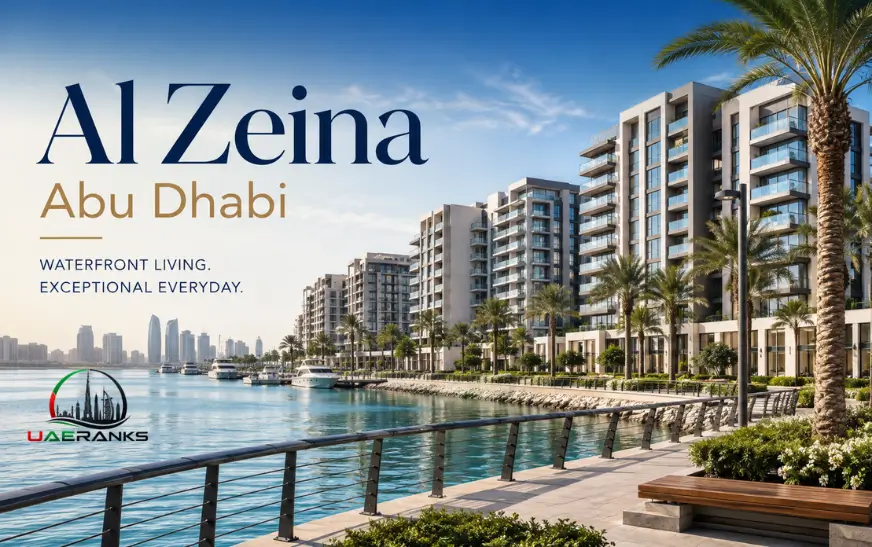
Al Zeina Abu Dhabi Area Guide | Living, Property & Amenities
MAG 5 Boulevard by MAG Group in Dubai | Complete Buyer and Renter Guide