
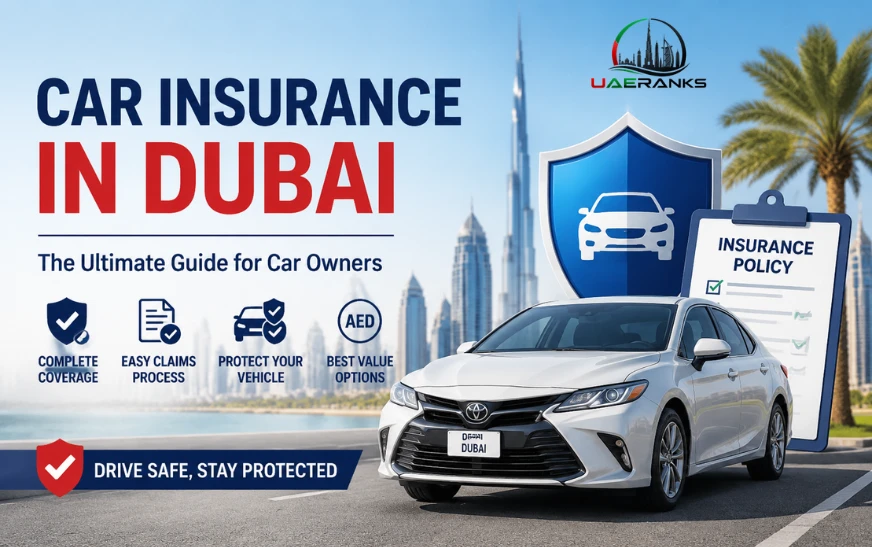
When it comes to car insurance in Dubai, it’s not just about the lowest annual premium. The right policy should cover you for the financial impact of accidents and provide you with a clear and practical claims process if things go wrong.
Dubai car owners have the option of either third party liability or comprehensive coverage. But policies with the same name can have different deductibles, repair requirements, exclusions, geographic restrictions, and optional coverage.
This guide will help you understand how Dubai car insurance works, what factors influence the cost of car insurance in Dubai, how to compare car insurance policies, and what to do after an accident.
Important: This article provides general information. Actual coverage is provided by your policy schedule, certificate, endorsements and full wording.
Why Car Insurance Matters in Dubai
Motor insurance is a crucial requirement for owning and registering a car in Dubai. The Roads and Transport Authority checks the validity of the insurance and, if necessary, the technical inspection when the vehicle owner applies for the vehicle registration to be renewed.
Insurance also helps drivers avoid costs that may be far greater than the annual premium. A minor accident can result in multiple vehicles being repaired, towing fees, replacement transportation, and injury liability.
Insurance is not just about meeting regulatory requirements. It is to pass on certain financial risks to an authorised insurance company, as per the conditions and exclusions of the policy.
Main Types of Car Insurance in Dubai
The UAE motor insurance framework includes unified policy forms for third-party liability and vehicle loss or damage.
Understanding the difference between these forms is the first step toward choosing suitable coverage.
| Feature | Third-party liability | Comprehensive insurance |
|---|---|---|
| Damage to another person’s vehicle | Covered, subject to policy terms | Covered, subject to policy terms |
| Third-party bodily injury liability | Covered | Covered |
| Accidental damage to your own car | Not covered | Generally covered |
| Theft or fire damage to your car | Not covered | Generally covered |
| Deductible on your own-damage claim | Not applicable | Usually applies |
| Optional benefits | Limited | Commonly available |
| Typical suitability | Lower-value vehicles or minimum protection | Newer, financed, valuable, or regularly used vehicles |
Third-party liability insurance
Third party car insurance is designed to cover liability that you may be held responsible for if your insured car causes injury or property damage to another party. The combined UAE third party policy is intended to cover the liability of the insured vehicle and pay compensation to the injured third party.
But, in general, it is not a wise idea to repair your own car if you are at fault in an accident.
If you accidentally hit another car while changing lanes, for instance. The other vehicle’s insurance company may pay for the damage to the other car, but you would likely be responsible for your own repairs.
This may be a good choice for an older or less expensive vehicle if the owner is willing to accept the potential risk of damage to the insured car.
Comprehensive car insurance
Full coverage car insurance covers specified loss or damage to your car and also covers third-party liability.
The UAE’s common loss and damage wording covers accidental collision or overturning, external fire, theft, malicious acts by third parties and some damage during transportation. Coverage is subject to the conditions, exclusions, insured value and endorsements of the policy.
Comprehensive cover is commonly more appropriate for:
- New or recently bought cars.
- Financed cars.
- Expensive or high-dollar models.
- Cars used for frequent commuting.
- Owners who were unable to afford significant repairs or replacement.
Comprehensive car insurance may cover the following:
There are a number of scenarios in which a comprehensive policy can offer protection, but the coverage may differ from one insurance company to another.
Accidental damage
This is the main element of full coverage. It can pay for eligible repair costs if your vehicle is damaged in a collision, including if you caused the collision.
Fire and theft
The UAE loss and damage wording covers external fire, some explosions, robbery and theft.
Inquire about how the insurance company determines the compensation in case of a total loss or theft. The payment can be materially influenced by the insured value, depreciation provisions, and settlement method.
Third-party liability
The third-party coverage is usually included in comprehensive insurance. This means that one policy can cover the damage to your car and your legal responsibility to others.
Towing or recovery
A policy may include reasonable transportation or safeguarding costs if an insured vehicle becomes unroadworthy due to covered damage.
The policy may still have restrictions or mandate that you use an approved recovery provider.
Common Exclusions and Optional Add-Ons
Comprehensive is not a coverage for all possible losses.
Common exclusions or restrictions may involve:
- Driving without the correct valid licence.
- Operating a motor vehicle while intoxicated or on drugs.
- Operating the vehicle for an unregistered commercial or illegal use.
- Racing or speed testing.
- Mechanical or electrical failure, other than insured accidental damage.
- Damage to tyres in the absence of any other insured vehicle damage.
- Excessive loads or passengers carried when this is the direct cause of the damage.
- Driving beyond the scope of the policy’s geographical area.
- Natural disasters, unless appropriate protection is provided.
The unified loss-and-damage wording lists natural disasters among its exclusions. Owners of vehicles who are worried about flooding or other natural hazards should therefore ensure that the policy schedule or endorsement specifically covers the extension of coverage.
Some optional benefits that can be useful are:
- Agency repairs.
- Roadside assistance.
- Rental-car or loss-of-use benefits.
- Oman or wider GCC coverage.
- Personal accident insurance for driver or passengers.
- Windscreen cover.
- Off-road cover.
- Natural-peril protection.
- Personal property coverage.
Never assume that an add-on is included just because it was mentioned in an advertisement. Verify benefit limits, deductibles, eligibility requirements and geographic coverage in writing.
Factors that influence the cost of car insurance in Dubai?
There is no single price for Dubai car insurance. Insurers evaluate the likelihood of a claim and the cost of the claim before they quote.
Some of the key considerations are:
The cost of the vehicle and the cost of repairs
The higher the value of the vehicle, the greater the potential loss. More expensive models, those that use special materials, advanced sensors, or have a limited network of repair shops can also be more costly to insure.
Driver profile
The quote and/or deductible may vary based on age, driving experience, licence history and previous claims. In certain higher-risk situations, such as some claims by younger drivers or certain vehicle types, the UAE motor policy framework permits some additional deductibles.
Claims history
A driver with a clean record might be eligible for a no-claims discount. When comparing renewal offers, ask if the discount has been applied and if it can be backed up with a no-claims certificate from the current insurance company.
Coverage level
Third party insurance carries less own vehicle risk for the insurance company than comprehensive cover. Full coverage with agency repairs, replacement car, natural peril coverage, and a low deductible will typically be more expensive than basic coverage.
Deductible
The deductible, or excess, is the amount the policyholder pays for an eligible own-damage claim.
The higher the voluntary deductible, the lower the premium, but the higher the cost after an accident. Choose a sum that you would be able to afford.
Vehicle use
Private use, business use, commercial delivery, ride-hailing, rental activity, and off-road driving do not pose the same risks. The purpose of the use must be a true representation of the way the vehicle is used.
How to Compare Car Insurance Policies
While price is important, comparing premiums without comparing coverage can result in an inappropriate choice.
| What to Compare | What to Check | Why It Matters |
|---|---|---|
| Type of cover | Third-party or comprehensive | Comprehensive covers your own car; third-party usually does not |
| Insured vehicle value | Amount shown in the policy | It may affect the payment for theft or total loss |
| Repair type | Agency or non-agency repair | Agency repair may suit newer or luxury cars |
| Deductible | Amount you pay during a claim | A lower premium may come with a higher deductible |
| Natural-peril cover | Flood, storm, or other natural hazards | This protection may not be included automatically |
| Geographical coverage | UAE, Oman, or GCC coverage | Important when driving outside the UAE |
| Roadside assistance | Towing, battery support, and emergency help | Useful if your car breaks down |
| Replacement car | Number of days and daily limit | Helps you travel while your car is being repaired |
| Personal accident cover | Driver and passenger protection | May provide benefits for covered injuries |
| Claims process | Reporting method and required documents | A simple claims process can save time after an accident |
| Exclusions | Situations not covered by the policy | Helps prevent unexpected claim rejection |
| Insurer service | Customer support and repair network | Good service is important when making a claim |
1. Compare the same type of cover
A basic third party quote is not the same as a comprehensive quote and should not be compared to it as such.
Compare for comprehensive policies:
- Insured vehicle value.
- Agency or non-agency repair.
- Basic and extra deductibles.
- Natural-peril protection.
- Geographical limits.
- Replacement-car benefit.
- Roadside assistance.
- Personal accident benefits.
- Off road cover (where applicable).
- Exclusions and special conditions.
2. Review the repair plan
Agency repair is when the work is carried out by the vehicle manufacturer’s authorised repair network. In a non-agency repair, garages are typically approved by the insurance company.
Agency repair can be crucial for a new, luxury, highly technical or warranty sensitive vehicle. If you have an older vehicle, a trusted approved garage network might be enough to protect you at a lower premium.
3. Check the insured value
If the insured value is much lower than the reasonable market value of the vehicle, then a cheap policy is less appealing.
Inquire about the use of the value in a total loss and if depreciation would be applied.
4. Review the claims process
Learn how claims are reported, how repair approvals are issued, if tracking is available online, and what documents are required.
The quality of service is much more significant after an accident than when purchasing the policy.
5. Read the entire text.
Please check the policy schedule, certificate, exclusions and endorsements prior to payment. Insurers should inform customers about coverage, deductible, conditions, exclusions and restrictions.
How to Buy or Renew Car Insurance in Dubai
The purchasing process is typically simple:
- Collect your Emirates ID, driving licence, vehicle registration information and previous policy details.
- Get similar quotes from licensed insurance companies or insurance brokers.
- Verify coverage, vehicle value, deductible, repair type and add-ons.
- Provide relevant information in an accurate manner.
- Pay the premium and get the policy documents.
- Ensure that the insurance information is updated in the traffic system by the insurer.
- Complete the RTA registration or renewal process.
RTA checks the validity of the vehicle insurance before finalizing the vehicle-registration renewal. The insurance should be in effect at the time of renewal.
Don’t wait until the last day. Early comparison allows you to rectify any incorrect vehicle information, secure a no-claims certificate or address any electronic insurance-update issue.
How to Make a Car Insurance Claim
If an accident occurs, proceed carefully.
1. Prioritise safety
When it is legal and safe to do so, move to a safe place. In case of an accident or injury, call Dubai Police on 999. Non-emergency enquiries are made using the number 901.
2. Obtain an accident report
A police accident report is normally required for a motor claim. Dubai Police offers reporting services for minor or moderate collisions without injuries, accidents with an unknown party, and reissuing previous reports.
3. Inform the insurance company immediately
Call the insurance company on their claims hotline, application, website or authorised service centre. Provide the police report and requested supporting documents.
The unified policy mandates that insured drivers report any relevant claims, investigations, theft or criminal activity to the insurer immediately and cooperate with the claims process.
4. Wait for inspection or approval
Never allow significant repairs without the insurer’s permission. The vehicle may require inspection or to be sent to an approved repairer.
5. Confirm your contribution
If the claim is an eligible own damage claim, you may be required to pay the policy deductible and any additional deductible.
Maintain copies of reports, estimates, approvals, receipts, messages and complaint reference numbers until the claim is fully resolved.
Common Car Insurance Mistakes to Avoid
By not making these mistakes, vehicle owners can prevent many coverage issues:
- Selecting a policy based on the lowest premium.
- Assuming that all comprehensive policies have the same benefits.
- Not revealing the true purpose or changes of the vehicle.
- Ignoring geographical restrictions before driving outside the UAE.
- Mixing up agency repair with an insurer-approved garage.
- Selecting a deductible that would be difficult to pay.
- Taking flood or natural-disaster coverage for granted.
- Allowing someone else to drive without reading the policy terms.
- Beginning repairs without a report or approval.
- Not reading exclusions after a claim is denied.
A quick review before buying can save you a lot of money down the road.
What to Do If You Have an Insurance Complaint
Start with a written complaint to the insurance company. Be clear about the problem, specify the solution you are asking for, and include supporting documents.
If the insurer’s internal process fails to resolve the issue, eligible consumers may file an insurance complaint with the independent complaints-resolution unit set up by the Central Bank of the UAE, Sanadak. Initial complaints are free for consumers and small or medium-sized businesses.
Maintain a complete record containing:
- The policy and endorsements.
- Police reports.
- Claim forms.
- Repair estimates.
- Rejection or settlement letters.
- Photographs.
- Emails and messages.
- Complaint and claim reference numbers.
Conclusion
The right car insurance in Dubai is a combination of cost, coverage, deductible, repair quality, and claims support.
Third party insurance can meet the requirements of owners who are willing to take the risk of damage to their own vehicles. Comprehensive insurance offers more coverage, but the actual coverage depends on the insured value, exclusions, repair requirements, geographic coverage and add-ons.
When buying or renewing, compare policies line by line, not premium by premium. The cheapest policy is not necessarily the best policy; it is the policy that you know and can count on in case of an accident.
FAQs
1. Is car insurance mandatory in Dubai?
The Dubai vehicle-registration and renewal process requires valid vehicle insurance. RTA verifies the insurance before completing a renewal.
2. What is the minimum car insurance required in Dubai?
The most basic type of motor insurance is third party liability. It shields against coverage for injuries or property damage to another party.
3. What is comprehensive car insurance?
Comprehensive insurance protects against third-party liability and against specified damage to the insured vehicle, up to the limits of the policy, the deductible, conditions and exclusions.
4. Does third-party insurance cover my own car?
No. Third party insurance typically won’t cover damage to your own car if you are at fault for the accident.
5. Does full coverage insurance include flood damage?
Not automatically. Natural disasters are excluded in the unified policy wording and the policy or endorsement should be reviewed to see if there is specific coverage for natural perils.
6. What is an insurance deductible?
A deductible is the amount that you are required to pay towards an eligible own damage claim before or in addition to the insurer’s payment.
7. Does every policy include agency repair?
Depending on the insurance company and policy, agency repair may be included, optional, limited by vehicle age, or not available.
8. Can I drive to Oman with Dubai car insurance?
Only if the policy’s geographical scope or an extension applies. Confirm the territorial limits before travelling.
9. What are the typical documents required for a claim?
The insurance company will typically ask for the police report, driving licence, Emirates ID, vehicle registration, policy information and claim form.
10. How to complain against Dubai insurance company?
Talk to the insurance company first. Eligible consumers can take the internal complaint to Sanadak if it is not resolved.
Related:
Al Qusais Police Station Dubai | Location, Services and Visit Guide
Creek Metro Station Dubai | Location, Routes, Fares and Travel Tips
DPI Test Dubai | Cost, Centers, Locations, Results and Process