
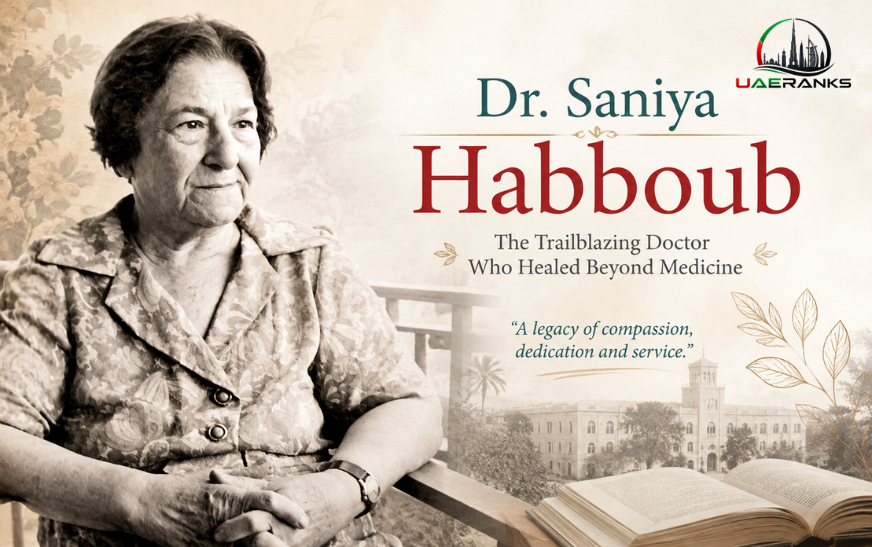
Dr. Saniya Habboub was a trailblazer in the field of medicine in Lebanon, whose education, medical practice and public service paved the way for women to achieve more in early 20th century Lebanon. She went from Beirut to the United States, finished her medical studies and returned home, where she served her community, despite the social opposition she encountered.
Her significance goes beyond being one of the first female physicians in Lebanon. Her story is about women’s education, affordable health care, professional bravery and social transformation. She was not just a woman in a man’s world. She was able to provide medical care to women who may not have been able to get it otherwise.
Quick Facts About Dr. Saniya Habboub
Dr. Saniya Moustafa Habboub was born in Beirut in 1901. In other English-language records her first name is also recorded as Saniyya, Sania, Saniyeh or Saniyeh.
She was among the first graduates of Beirut’s American Junior College for Women in 1926. She went on to visit the United States and earned her medical degree in 1931 from the Woman’s Medical College of Pennsylvania. She moved back to Beirut and opened a medical office for women and others.
She provided obstetric and general medical services, and helped patients who were unable to pay for services and treatment with charitable and medical institutions. In 1982, she was awarded the Lebanese government’s Health Medal of Merit. She died in 1983 at the age of 82.
| Category | Details |
|---|---|
| Full Name | Dr. Saniya Moustafa Habboub |
| Born | 1901, Beirut, Lebanon |
| Family | Supportive and education-focused |
| Education | Woman’s Medical College of Pennsylvania |
| Graduation | 1931 |
| Career | Physician and humanitarian |
| Specialties | Obstetrics and general medicine |
| Focus | Women’s health and community care |
| Challenges | Gender bias and social restrictions |
| Achievement | First Lebanese woman to earn an MD abroad |
| Award | Health Medal of Merit, 1982 |
| Legacy | Pioneer for women in medicine |
| Died | 1983 |
Who Was Dr. Saniya Habboub?
Dr. Saniya Habboub was a Lebanese physician, community health worker and pioneer in the professional development of women in the Arab world.
She is the first Lebanese woman to earn a medical degree abroad, according to Lebanese American University. According to Google’s 2022 commemoration, she was one of the first female doctors from Lebanon to study medicine in the United States. LAU’s historical timeline also names her as the first female doctor to practice in Beirut.
These descriptions illustrate the importance of precision. Her success was not on the basis of a single, general term, “first woman doctor”. It included a number of stages: studying medicine in foreign countries, becoming a doctor and opening a medical practice in Beirut, which was unheard of for a woman at the time.
Early Life and the Family That Valued Education
Saniya Habboub was born in Beirut to a Muslim family. Her father, Mustapha Habboub, became a successful leather maker. Her mother, Adila al-Jazairy, was not educated, but she was very keen for her daughters to be educated.
Her mother was inspired after witnessing a woman reading a newspaper while traveling to Beirut, according to a family-based account published by Lebanese American University. She resolved that if she had any daughters, they should be able to read and get an education. Later, both parents encouraged Saniya’s studies, despite the disapproval of the people around her.
Her childhood was not without its difficulties. As a teenager, she had typhoid fever and lost a younger sister to the disease. The disease also left Saniya with permanent issues in one leg. She faced these physical and emotional challenges and went back to school and kept on learning.
Her family’s support was particularly significant as the obstacles she faced were not just academic. They involved expectations about marriage, public behavior, travel and the roles considered acceptable for women.
Her Education and Journey to Medical School
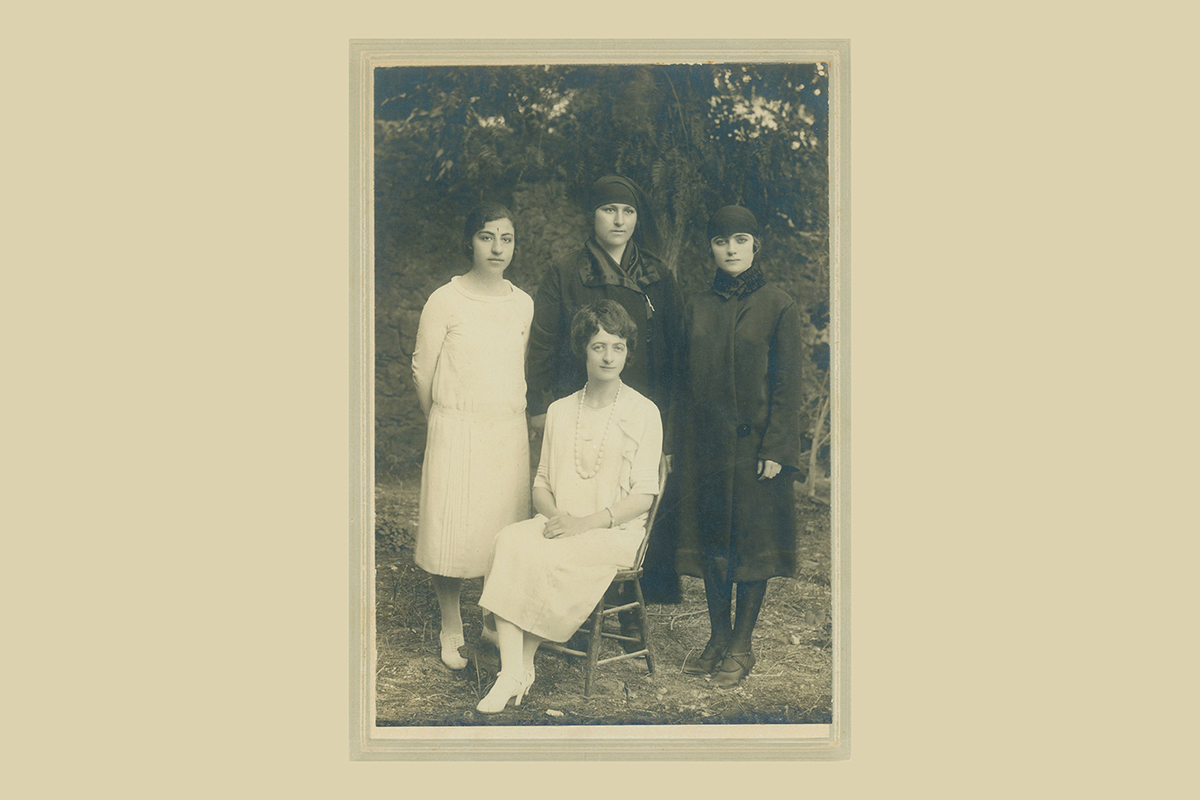
Habboub started her education at the American School for Girls. She enrolled in the first class of the American Junior College for Women in 1924, which was later incorporated into Lebanese American University.
She was one of the first three graduates of the college in 1926. She then attended the American University of Beirut, where she was thinking about becoming a doctor. But medicine brought her a lot of social pressure, as medical education was conducted with men and medicine was considered a profession for men.
Instead of giving up on her goal, she explored the United States. She went there in 1926, a very independent choice for a young Lebanese woman at the time.
In 1931, she received her medical degree from the Woman’s Medical College of Pennsylvania. The institution was historically significant in its own right: its records are part of Drexel University’s collections on the history of women in medicine.
Her graduation was more than just an academic achievement. It demonstrated that women from Lebanon were able to study at a higher level abroad and bring back skills that were directly applicable to their communities.
Breaking Barriers for Women in Medicine
The problem wasn’t that Habboub was not able. The general opinion was that women should not attend college or go to medical school.
Her family reports that she was the target of public hostility for continuing to attend school. She was also criticized for studying in mixed education schools and later for her trips abroad.
These pressures account for the continued significance of her achievement. For many students, going to university is a normal part of life today. It took Habboub challenging the expectations of what a woman should wear, how she should travel, how she should study and how she should engage in public life.
Her success was also a gradual change of perception. A degree alone did not guarantee that patients would trust a female physician. She had to prove her ability in daily medical practice and establish her reputation in the community.
Her career was particularly influential because of that mix of education and trust-building. She demonstrated that a woman could become a doctor, and that patients would trust and appreciate her medical attention.
The Return to Beirut and the Opening of a Medical Practice
Habboub went back to Beirut after finishing her studies and additional clinical training. She established her own practice in 1933 in the Bab Idriss area, practicing obstetrics and general medicine.
Some patients were initially mistaken for her to be a midwife instead of a fully qualified doctor. This was a reflection of the few professional positions that were available to women at the time.
But as patients came into contact with her, their perceptions shifted. Women and families from all over the community started coming to her clinic and she built up a well-known medical practice. Her acceptance provided a real-life model for other women to follow in their education and career choices.
Her clinic was thus a health care centre and a public statement against the prevailing gender roles. Each successful consultation contributed to the desegregation of the image of a woman physician.Each successful consultation helped to make the idea of a woman physician less unusual.
Community Service and Accessible Healthcare
Dr. Saniya Habboub’s most significant work was her dedication to patients with limited financial means.
According to LAU’s account, she treated the poor and needy women without charging them, visited their homes and cared for them in the community. This helped to lower some of the financial and social obstacles that might keep women from going to a doctor.
She also worked with the Lebanese Red Cross and with various organizations such as the Muslim Orphanage and the Young Women’s Muslim Association. She worked as a school doctor at her former school as well. Her history also shows that she served at Maqassed Hospital in Google’s history.
Her work is a good example of the principle of community medicine that health care is more effective when the professional is aware of the social and financial situation of the patient.
A trusted female doctor might be especially helpful for women who were not comfortable seeking advice from male physicians. Habboub’s presence thus expanded access not only in terms of free treatment, but also in terms of making medical care socially accessible.
Was Saniya Habboub Lebanon’s First Female Doctor?
Historical articles tend to make sweeping statements of “first ever” when describing the accomplishments of historical figures. In the case of Dr. Saniya Habboub, the most accurate description needs some detail.
She is the first Lebanese woman to get an MD in another country, and the first female doctor to practice in Beirut, according to Lebanese American University. Google calls her one of the first female doctors from Lebanon to study medicine abroad.
Meanwhile, the American University of Beirut names Adma Abu Shdeed as the first woman to earn an MD from AUB, in 1931.
Therefore, it is not accurate to refer to Habboub as “Lebanon’s first woman doctor.” A better description is:
Dr. Saniya Habboub was the first Lebanese woman to receive a medical degree abroad, one of the first female doctors in Lebanon and a pioneer woman doctor in Beirut.
This language acknowledges her accomplishment without erasing other women who made medical milestones during the same time.
Why Dr. Saniya Habboub’s Story Matters
She Broadened the Scope of Women’s Education
Habboub’s education was not just a matter of personal enrichment. She employed it to pursue a career, gain public confidence and deliver vital services.
Her success provided a tangible motivation for families to invest in their daughters’ education. It proved that women with education could make a direct contribution to health, public institutions and national development.
She Enhanced Access to Care
Her work with women of modest means was both socially and historically significant. Medical assistance was made more accessible to patients who may have postponed or not sought care through free consultations and home visits.
She made women in medicine more visible
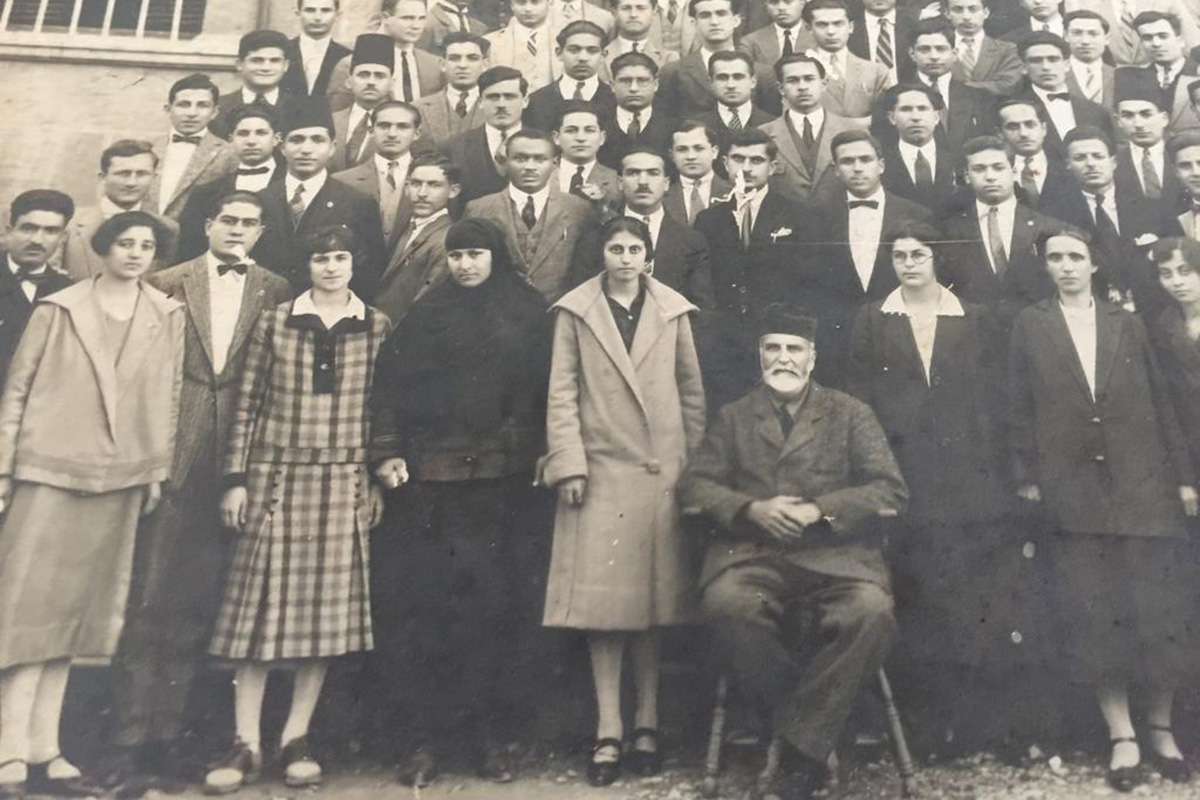
Representation is important because people tend to envision their possibilities based on what they see. A well-known female physician who ran her own practice made a medical career more accessible for younger women.
She Connected Professional Success With Public Service
Habboub’s involvement in private practice was not limited. She was active in medical, charitable and women’s groups, which enabled her to help the broader community.
She Demonstrated the Impact of Trust on Social Attitudes
Social prejudice is not eliminated by legal or educational access. Habboub’s career demonstrates that over time, professional competence and consistent service and direct patient experience can shift public perceptions.
Documented Honors and Recognition
Dr. Saniya Habboub was awarded the Health Medal of Merit by the Lebanese government in 1982, about fifty years after the start of her medical service.
A street in Beirut was also named after her. On June 10, 2022, Google featured a Doodle celebrating her life and commemorating the anniversary of her 1931 medical-school graduation.
Some online biographies mention “multiple awards,” but the Health Medal of Merit is the most clearly documented government award. The named street and Google Doodle are significant commemorations, but not professional awards.
Dr. Saniya Habboub’s Lessons on Life
There are a number of lessons to be learned from her career.
Family Support Can Challenge Restrictive Norms
Her parents were not able to clear all the social barriers, but they provided her with the support to pursue her studies. Their example demonstrates the intergenerational impact of family encouragement on educational access.
Qualifications Need to Be Matched by Community Trust
Habboub came back with a medical degree, but she still had to prove herself to patients. Professional authority developed through reliable care, availability and respect for the community.
Representation Opens Up More Opportunities
A pioneer does more than just accomplish a personal objective. That person makes a role that was not common before visible, which decreases uncertainty for those who follow.
Medical Leadership Includes Accessible Care
Her free treatment and home visits show that medical impact is not just about status or income. It is also assessed by who is cared for and what barriers are taken away.
Historical Claims Must Be Made With Care
Her life also offers an editorial lesson. Women’s history is frequently reduced to a race to be the first. Precise language allows Habboub to give proper credit to other early Lebanese women physicians while maintaining the achievements of Habboub.
Dr. Saniya Habboub’s Lasting Legacy
Dr. Saniya Habboub passed away in 1983, but her legacy lives on in the institutions she served, the patients she treated, and the women who followed her into higher education and medicine.
Her legacy is not just about fame. It is based on a clear pattern: education followed by professional courage, community service and more opportunity for others.
At a time when women’s involvement in medicine was strongly resisted, she entered medicine. She went back home because it would have been easier for her to pursue a career abroad. She then set up a practice, worked with women who had limited resources and was involved in community organizations.
Conclusion
Dr. Saniya Habboub was one of the most important early women physicians in Lebanese history. Her story of leaving Beirut’s girls’ school for medical training in the United States and then spending decades in the community was a testament to the power of education and determination.
The best way to remember her is not by an overstated title. It is through the documented substance of her work: she crossed educational and social barriers, earned professional trust, improved access to medical care and helped make medicine a more imaginable career for Lebanese women.
FAQ’s
1. Who Was Dr. Saniya Habboub?
Dr. Saniya Habboub was a trailblazer in the field of medicine, a Lebanese physician who studied medicine in the United States and then opened a medical practice in Beirut.
2. When Was Dr. Saniya Habboub Born?
She was born in Beirut in 1901 and died in 1983 at the age of 82.
3. Where Did Saniya Habboub Study Medicine?
In 1931 she earned her medical degree from the Woman’s Medical College of Pennsylvania.
4. Dr. Saniya Habboub Is Famous for What?
She is remembered as the first Lebanese woman to get a medical degree abroad and one of the first practicing female physicians in Lebanon.
5. Was Saniya Habboub Lebanon’s First Female Doctor?
She is better known as the first Lebanese woman to obtain an MD degree outside of Lebanon and the first female doctor recognized by LAU as practicing in Beirut.
6. What Type of Medicine Did She Practice?
She practiced obstetrics and general medicine, and was especially recognized for her care of women and families in Beirut.
7. Was Dr. Saniya Habboub a Doctor?
Yes. She is said to have treated the poor and needy women free of charge and visited them at their homes.
8. Which Organizations Did She Serve?
She was connected to the Lebanese Red Cross, the Muslim Orphanage, the Young Women’s Muslim Association and other community organizations.
9. Dr. Saniya Habboub Was Awarded What?
In 1982, she was awarded the Health Medal of Merit by the Lebanese government.
10. What Is the Name of the Book That Dr. Saniya Habboub Wrote?
She is honored in historical institutions, a Beirut street named after her, and a Google Doodle in her honor in 2022.
More to Checkout: Ousha Al Suwaidi | The Life, Poetry and Cultural Legacy of “Girl of the Arabs”