
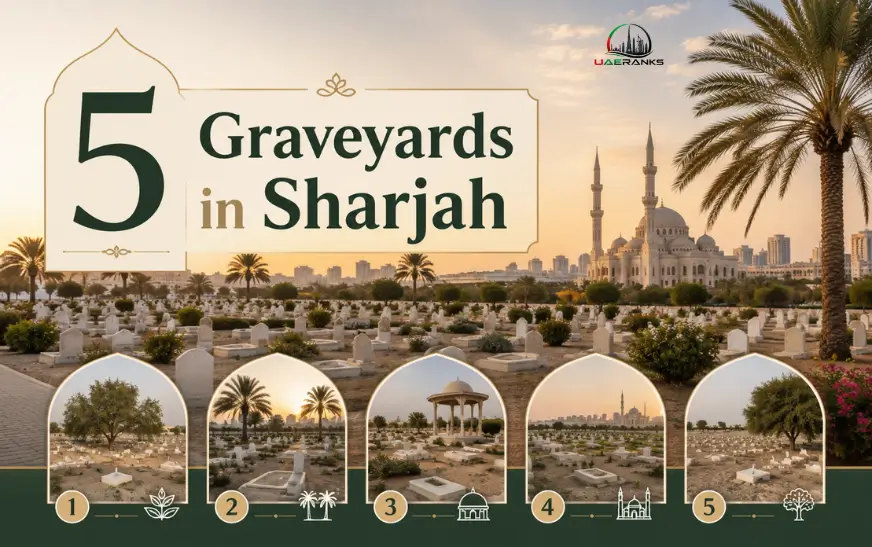
Sharjah is the capital city of culture in The United Arab Emirates, is famous for its mosques, museums along with heritage and cultural sites. However, hidden in its deserted neighborhoods and the outskirts of the city are graveyards that provide a compelling tale -one of religion, tradition as well as colonial past and the ancient civilisation. These are five noteworthy graveyards in Sharjah worthy of your attention.
1. Sharjah Graveyard (Sharjah Cemetery)
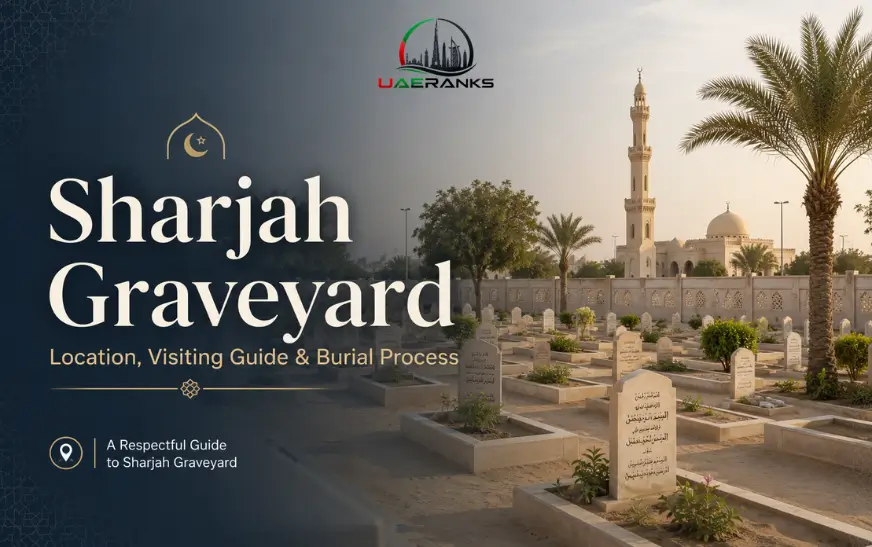
On highest of this list are at the top of this list is Sharjah Graveyard, which is also referred to by the Sharjah Cemetery it is among the most important burial grounds. It is the final resting spot for people of diverse backgrounds -local Emiratis and expatriates and people belonging to different religious communities. The graveyard is meticulously designed, and has sections arranged in accordance with religious affiliation which reflects Sharjah’s status as a multi-cultural hub in the UAE.
It is the Sharjah Graveyard is governed through the Sharjah Municipality which is responsible for the burial sites, their maintenance and accessibility. Similar to other cemeteries in the emirate, it adheres to Islamic burial practices in Muslim sections, which include basic graves, which are unmarked or lightly marked graves, in line with Islamic customs, and separate sections cater to the burial customs of different communities. For Sharjah residents, the cemetery is not just a sacred place but also a symbol of the growth of Sharjah and development. As the city’s growth has increased throughout the years the cemetery has expanded along with it, and has become one of the biggest and most frequented burial grounds in the central region of the Emirate.
2. Al Jubail Graveyard
It is located close to the famous Al Jubail area — which is home to The Al Jubail fruit and vegetable market and close to iconic sites such as Al Noor Mosque — Al Jubail Graveyard is one of Sharjah’s centrally located cemeteries. Its closeness of its Al Jubail bus station and the bustling souq area makes it a popular landmark for the many people who walk every day, even though people don’t take the time to contemplate its past.
Al Jubail Graveyard primarily serves the Muslim community. It follows the the traditional Islamic burial customs, which include basic headstones with minimal decoration. The location in the midst of a crowded, older area of Sharjah means that it has been a witness to years of the city’s transformation and is a quiet spot amid the expansion of surrounding markets as well as mosques and housing blocks.
3. Sharjah Cemetery at St. Martin’s Church
A completely different graveyard lies just behind St. Martin’s Church in Sharjah. It is an Commonwealth War Graves Commission (CWGC) site, which contains graves related to non-World War personnel. The cemetery is maintained by the CWGC and those who are unable to access the gate are advised to call the church or the CWGC office to gain access.
The site serves as an ode to Sharjah’s link to a distinct chapter of its history — the time period in which the emirate was home to an air base of the British Royal Air Force base. It is distinct from Islamic cemeteries that are scattered throughout Sharjah, in both the design of headstones as well as the international military character of those who are buried there.
4. St. Martin’s Anglican Church Cemetery
In close proximity to the location that is mentioned above, St. Martin’s Anglican Church Cemetery contains the remains of 12 personnel who served in Sharjah, the previous Royal Air Force Station Sharjah that died in peacetime operations during the 1960s. Since Sharjah increased in size after the departure of the RAF The graves — situated on the back of the compound, where St. Martin’s Church was later constructed were mostly neglected and eventually began to decay.
The cemetery was discovered in 2008 by an ex- RAF officer who had been to one of the burials a few years earlier. His efforts led to a reconstruction campaign which was followed by the Commonwealth War Graves Commission subsequently renovated the cemetery, which was cleaned up to a high standard in 2010. It is now an extremely well-maintained, peaceful memorial to the foreign soldiers who died and lived far from home. It is one of the most unique heritage sites within the emirate.
5. Mleiha Cemetery
If you are interested in the past of past rather than contemporary cemetery grounds Mleiha Cemetery is unique. It is located about 50 km to the east of Sharjah city, close to Mleiha Archaeological Centre. Mleiha Archaeological Centre, this burial ground dates back approximately to 2300 BCE. It houses one of the tombs, called Umm the tomb of Al Nar, considered among the top and most striking burial structures found in the region’s oldest sites. It was continuously used for nearly two centuries.
The site was discovered in the year 1998 by the Sharjah’s Department of Antiquities within a date palm farm, Mleiha Cemetery sits within an archeological landscape that contains monumental tombs dating back to the 3rd through the 1st century BCE. Excavating here has revealed a glimpse into the rituals and customs associated with funerary burials of the early inhabitants of the area and have made it less of an ordinary graveyard in the traditional sense and more of a glimpse into the millennia-long human time.
Final Thoughts
From the frequently used Sharjah Graveyard in the middle of the city, to the old tombs in Mleiha Five sites represent the various layers of Sharjah’s past as well as its present. The way they are shaped is influenced by Islamic traditions, colonial culture, or an ancient civilization, each graveyard is an individual thread to the fabric of culture in the emirate as quiet sites which, once discovered reveal a lot of the residents who made Sharjah home throughout the ages.